
- HUMagyar
- ENEnglish (current language)
- DEDeutschno translation
- FRFrançais
- RUРусскийno translation
- UKУкраїнськаno translation
Home › Treatments › DHT-blocking therapy: dutasteride mesotherapy
DHT-blocking therapy: dutasteride mesotherapy
Dutasteride mesotherapy aims to reduce pattern hair loss where medically indicated. We provide information on the suitability, contraindications and course of the treatment at a personal consultation.
17 years of experience · 2000+ procedures · 4.8★ Google · 24 ISHRS courses
Before
After
DHT-blocking therapy: dutasteride mesotherapy
Dutasteride mesotherapy for hair loss
DHT-blocking therapy is an important, scientifically studied medical treatment approach for male and female pattern hair loss. At HairHungary Clinic, the treatment is primarily available as an intradermal microinjection – mesotherapy – procedure using the active ingredient dutasteride.
The aim of the treatment is to slow hair loss, protect hair follicles that are still viable and limit further deterioration.
When might it be worth considering DHT-blocking treatment?
Has your hair loss already started?
DHT-blocking therapy may be particularly justified for those whose hair loss has already begun but whose hair follicles are still viable. In such cases, the aim of the treatment is to slow the rate of hair loss and to preserve your existing hair over the longer term.
Considering a hair transplant?
A hair transplant requires planning not only for the transplanted hairs but also for your existing native hair, which remains prone to hair loss. Where clinically indicated, DHT-blocking treatment can therefore also form part of the long-term hair transplant plan.
Have you already had a hair transplant?
Alongside the transplanted hair, your original, non-transplanted hair may continue to thin later on. Where medically indicated, DHT-blocking treatment can also play a role in the long-term protection of your existing hair.
What is DHT, and why is it a key player in hair loss?
DHT - dihydrotestosterone - is the active metabolite of testosterone, formed through the action of the 5-alpha-reductase enzyme. In genetically susceptible individuals, increased levels of DHT in certain areas of the scalp have a direct effect on how the hair follicles function.
During this process, the hair follicles gradually become more sensitive to DHT, which can lead to thinning of the hair shafts, shortening of the growth cycle and ultimately atrophy of the follicles. This is why androgenetic alopecia appears in a characteristic pattern, mainly in the frontal area, the temples and the crown, or in some cases takes the form of female pattern hair loss instead.
How is dutasteride mesotherapy performed?
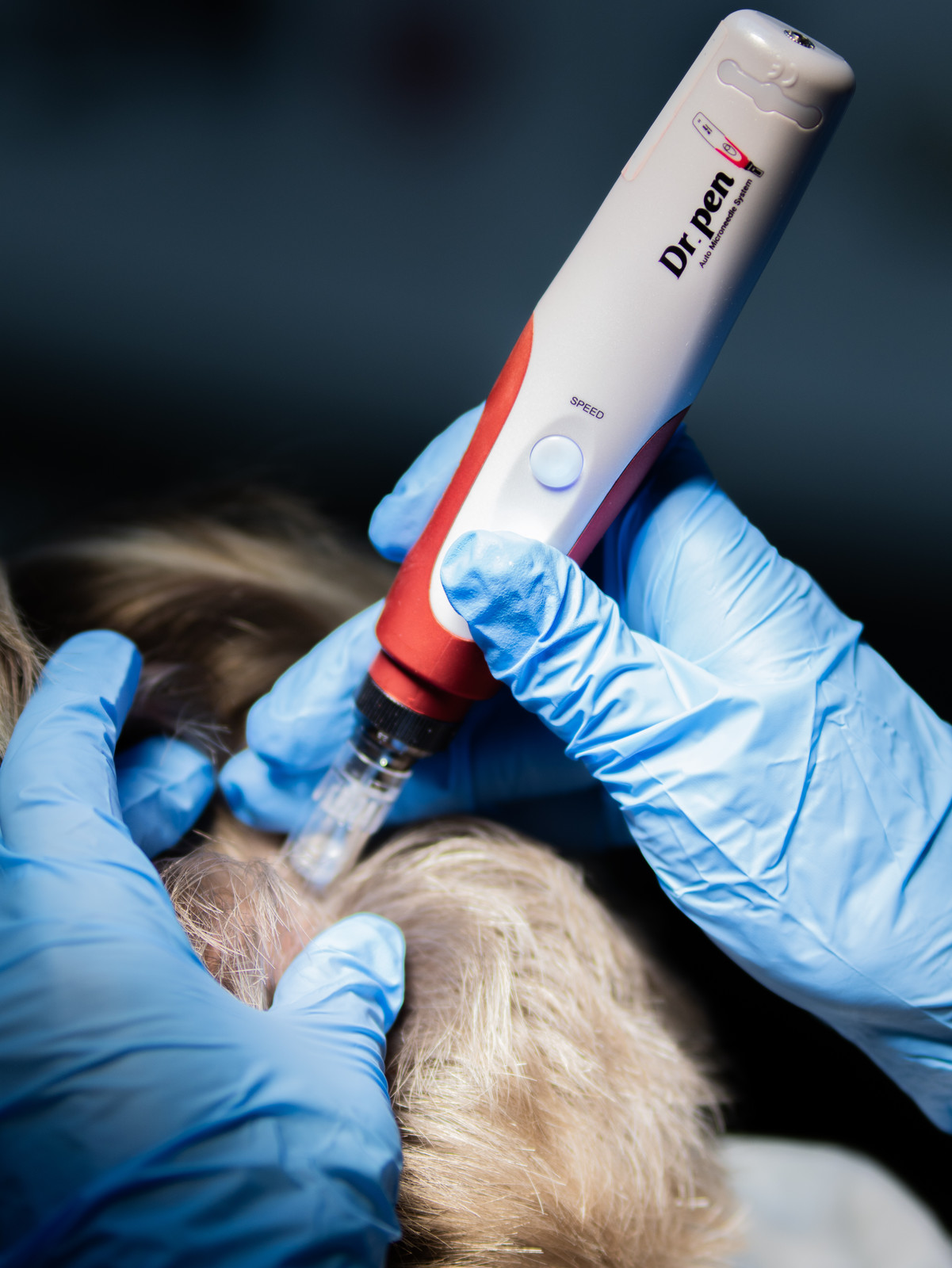
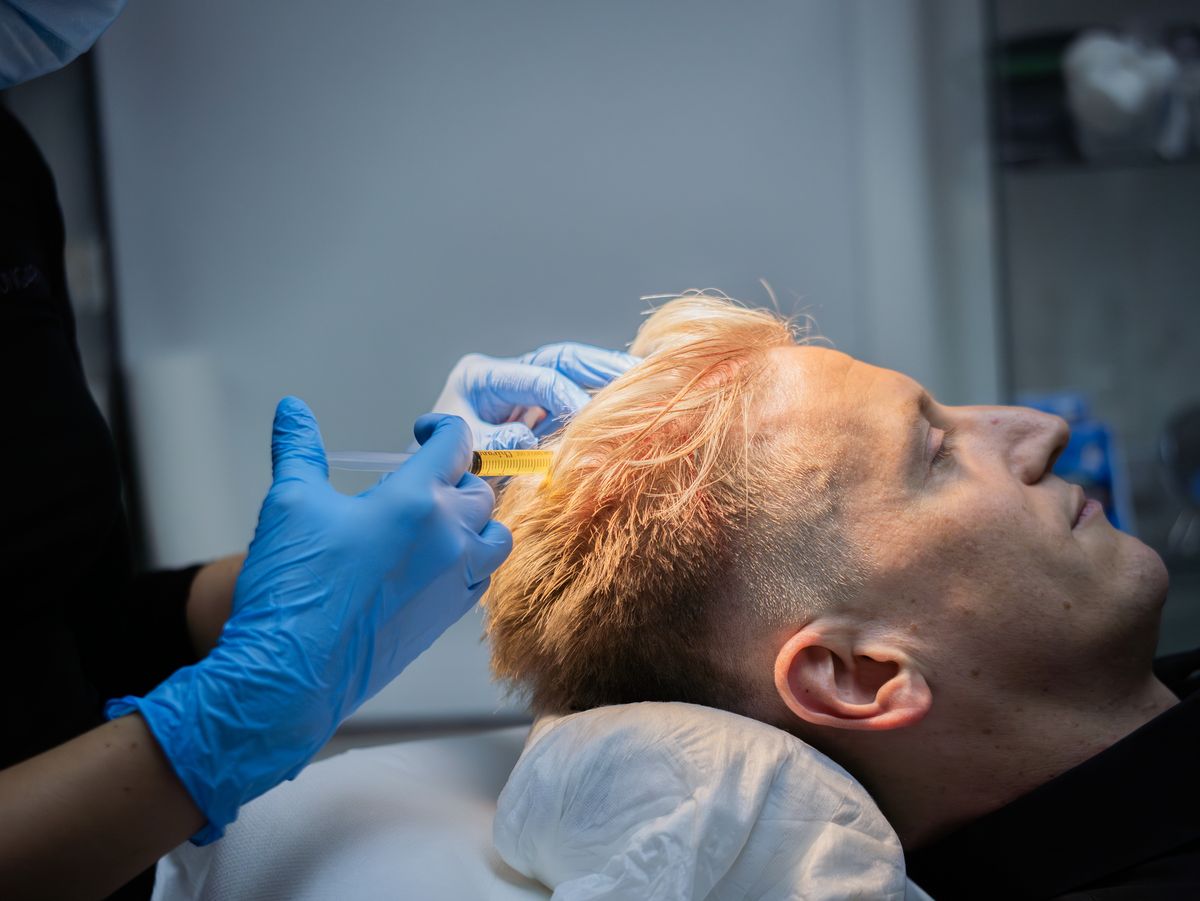
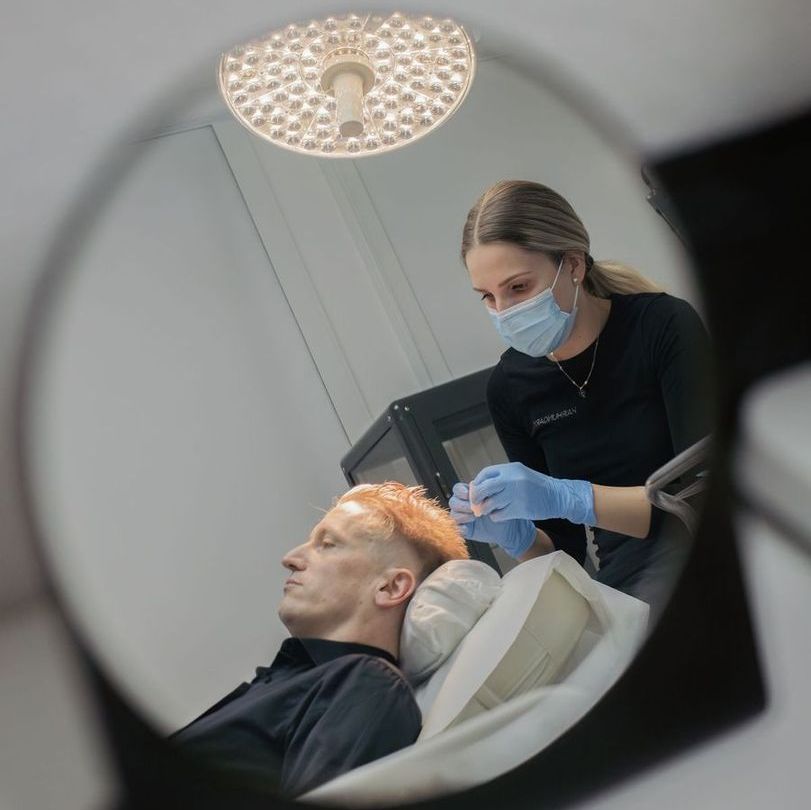
At HairHungary Clinic, one way of using dutasteride is intradermal microinjection mesotherapy. During this treatment, the active ingredient is delivered in a targeted way, directly into the area of the scalp to be treated.
This differs from oral medication. In the HairHungary DHT treatment programme, we primarily offer this local, mesotherapy-based procedure to patients for whom DHT blocking may be justified based on a medical examination.
The doctor tailors the frequency of treatment and the overall treatment plan to the state of your hair loss and your individual characteristics. Dutasteride mesotherapy generally only needs to be repeated every 2–3 months, depending on the extent of hair loss.
Who is DHT-blocking treatment recommended for?
For male patients
DHT-blocking therapy is particularly recommended for male patients whose hair loss has already started but whose hair follicles are still viable.
The treatment can be effective in the early and intermediate stages of the Norwood scale and can also play an important role in preserving results over the long term, both before and after a hair transplant.
For female patients
For women, DHT-blocking treatment can only be considered after a thorough examination.
Assessing the hormonal background, taking any endocrine abnormalities into account and ruling out pregnancy are essential in every case. Treatment is always the result of an individual medical decision.
How treatment begins at HairHungary Clinic
01
Medical consultation
We assess the type and stage of your hair loss and review your medical history, any coexisting conditions and the treatment options.
02
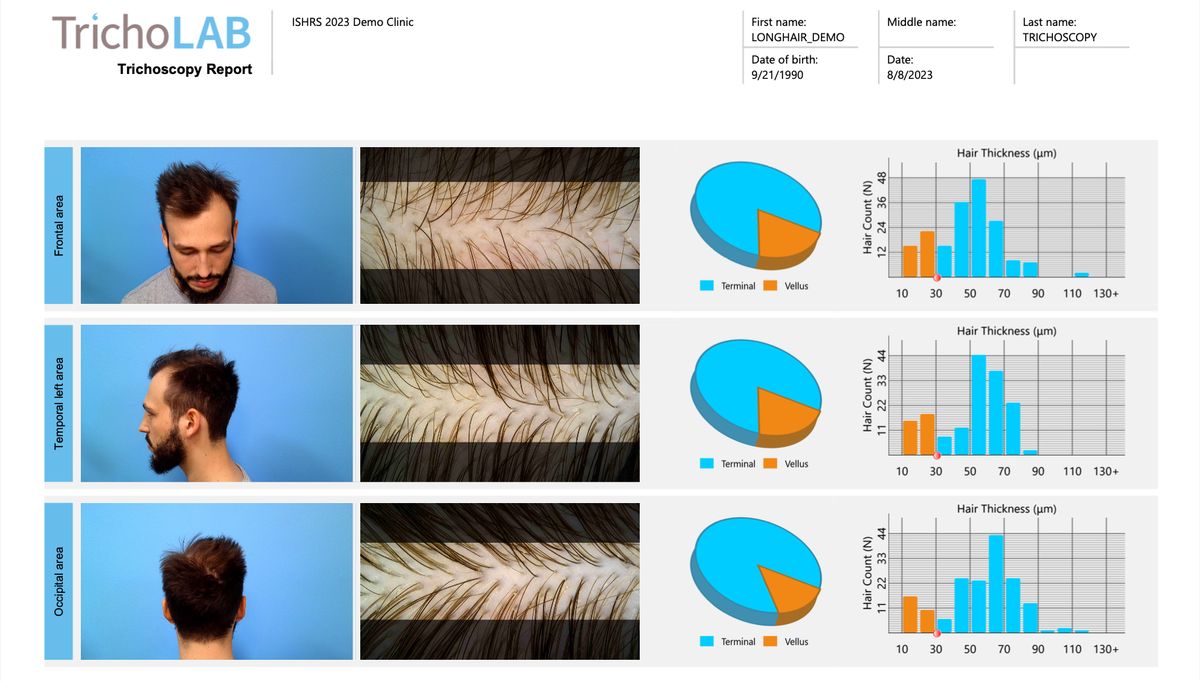
TrichoLAB analysis – recommended
A detailed hair and scalp examination records an objective baseline, which can provide an important point of comparison for later follow-up.
03
Dutasteride mesotherapy
Where medically indicated, the active ingredient dutasteride is delivered by microinjections into the area of the scalp to be treated.
04
Check-ups and follow-up
We evaluate the results of the therapy at follow-up examinations and adjust the treatment strategy if necessary.
We don't just treat – we also track the change
One of the challenges of treating hair loss is that change is gradual, so it is not always easy to judge the results objectively just by looking in the mirror or at photos.
A TrichoLAB analysis performed before starting treatment provides a detailed baseline. These data can be referred back to at check-ups, so changes can be tracked more precisely and compared more reliably.
When can you expect to see changes?
The effects of DHT-blocking treatments appear gradually, as the hair growth cycle is a long process.
In the first months, the main change you will notice is a slower rate of hair loss, while more visible results take longer. We assess the effectiveness of the treatment at regular follow-up examinations.
Treatments that can be combined
DHT-blocking therapy can be used on its own, but where indicated it can also be part of a comprehensive treatment strategy.
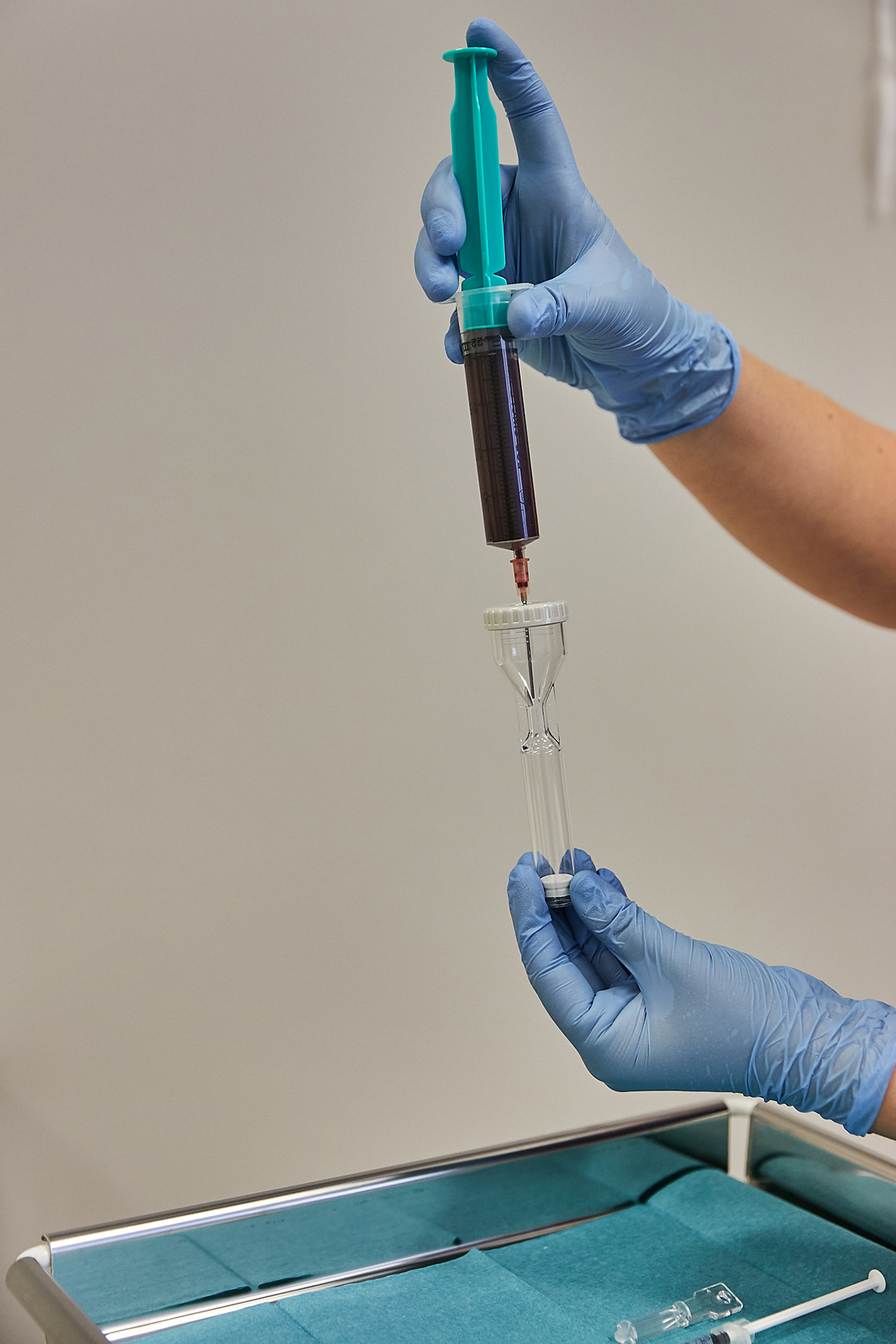
I-PRF / PRF
Regenerative therapies can complement hair loss treatment through a mechanism different from DHT blocking.
Minoxidil therapy
Where medically indicated, it can be part of a comprehensive treatment plan.
Correcting deficiencies
When investigating hair loss comprehensively, it is important to take into account any deficiencies and other underlying factors.
Hair transplant
Alongside a hair transplant, DHT blocking can also play a role in protecting your existing native hair.
What about oral DHT-blocking treatment?
In addition to mesotherapy, other DHT-blocking treatment options may also be considered where justified. Their use is always decided by the doctor.
Where justified, dutasteride may also be considered in oral form. This can only be decided by the doctor, based on the patient's condition, medical history and an individual risk–benefit assessment.
Finasteride also reduces DHT levels by inhibiting the 5-alpha-reductase enzyme, primarily by inhibiting type II.
It can be used in oral and topical form, but medical supervision is required in every case.
Plant extracts, such as saw palmetto, have a milder DHT-inhibiting effect. These products can be used primarily for milder hair loss or as a complementary therapy. However, their effect is more limited compared with medical treatments.
What you should know about dutasteride mesotherapy
- ✓Dutasteride mesotherapy is a micro-injection treatment in which the active ingredient is delivered into the scalp at multiple points. During the consultation, we provide detailed information about the treatment and the discomfort you can expect.
- ✓According to HairHungary's current treatment protocol, dutasteride mesotherapy can generally be repeated every 2–3 months, depending on the extent of hair loss and the individual treatment plan.
- ✓The number of treatments required is not the same for everyone. The doctor puts together a personalised treatment plan based on the type and stage of hair loss and the results of follow-up.
- ✓The change is gradual. Initial changes may appear after 8 – 12 weeks, trends can be assessed after 3–6 months, and stabilisation may take 6–12 months.
- ✓Yes, with an appropriate medical indication. DHT-blocking treatment can play a role both before and after hair transplantation in the long-term management of your existing, DHT-sensitive native hair.
- ✓In women, it can only be considered after a thorough examination. Taking the hormonal background and any endocrine abnormalities into account, as well as ruling out pregnancy, is essential. The decision on treatment is always made by the doctor.
- ✓No, it is a separately available examination. However, we strongly recommend it, as detailed documentation of your condition before treatment can provide a valuable basis for comparison at later check-ups.
Personalised treatment, not a one-size-fits-all therapy
At HairHungary Clinic, DHT-blocking treatments are always carried out on the basis of a medical examination and indication.
Choosing the right treatment strategy is based on an individual risk–benefit assessment, taking into account factors such as age, the stage of hair loss and any coexisting conditions.
During the consultation, we discuss in detail the possible treatment options, the expected results and the follow-up plan.
Price and consultation
Treatment fee (1 session)
HUF 60,000
4-session course: HUF 200,000.
Personal medical consultation
HUF 25,000
If you choose a procedure or a package, the consultation fee is deducted.
The HairHungary specialist
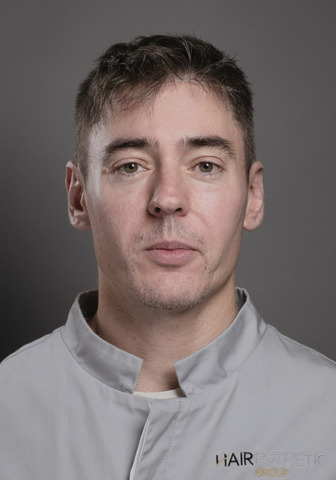
Dr. Dávid Zakariás
Doctor, hair transplant specialist
24 ISHRS courses, 50+ credits
Medical consultation: HUF 25,000
Request a call back!
For any questions or to arrange a consultation appointment:
Please fill in our form and our colleague will call you back at the time you indicated!