A beard transplant can help shape a sparse beard or moustache with your own follicular units. The achievable density and the number of grafts needed depend on the donor area and your individual needs.
17 years of experience · 2000+ procedures · 4.8★ Google · 24 ISHRS courses
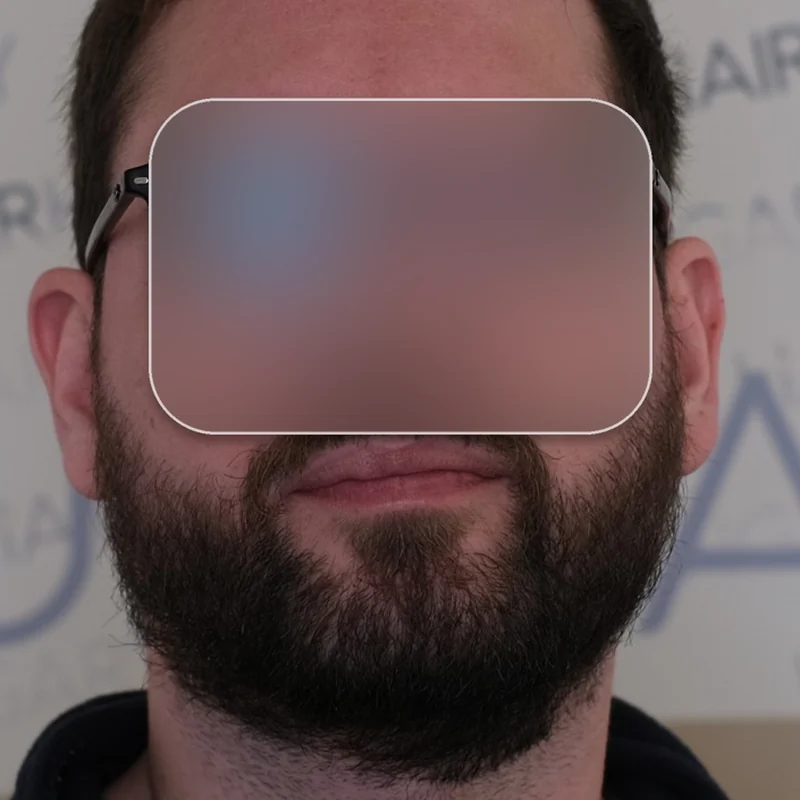
Before
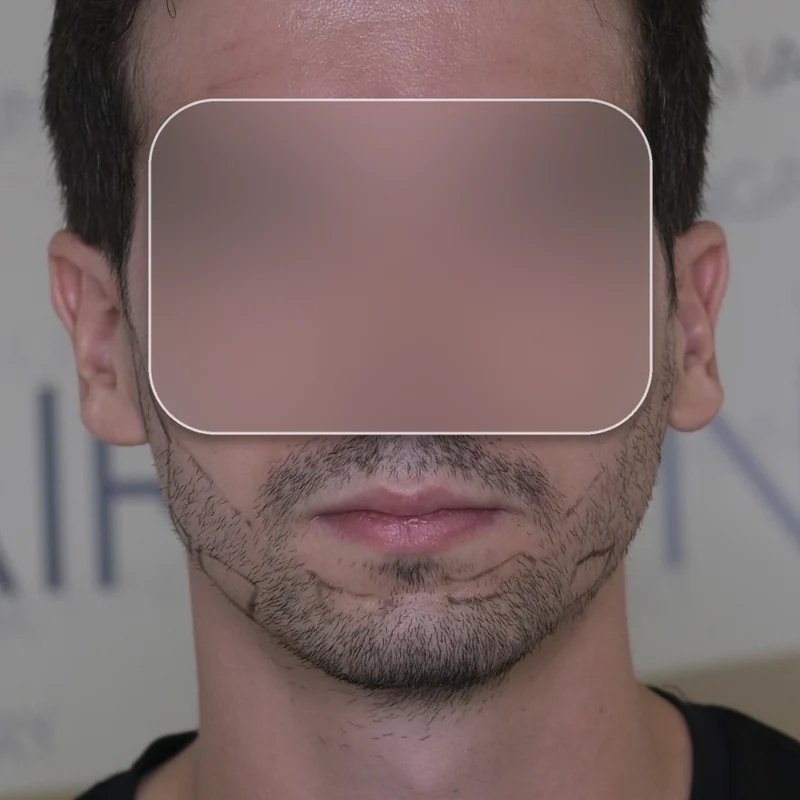
After
Beard transplant
Beard transplant with a refined method
A beard transplant makes it possible to restore sparse or patchy facial hair with your own hairs. At the personal medical consultation, a treatment plan is prepared based on your ideas and characteristics.
The principle and the technology are the same as in hair transplants : as donor, we use hair taken from the back of the patient's head, except when smaller gaps in the facial hair are filled. In that case, the beard area under the chin can also provide a sufficient number of hairs.
Before
After
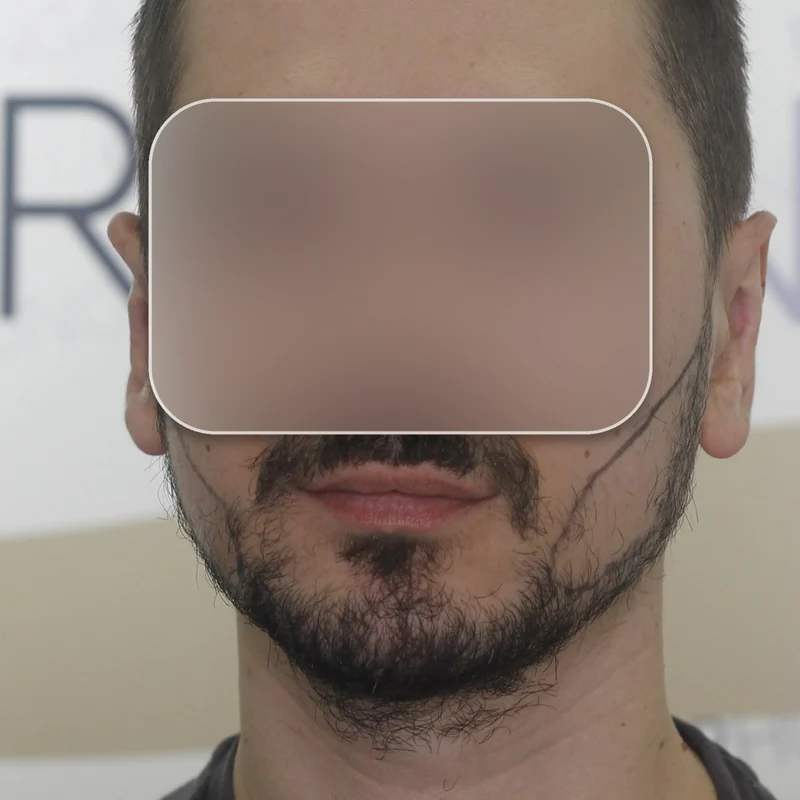
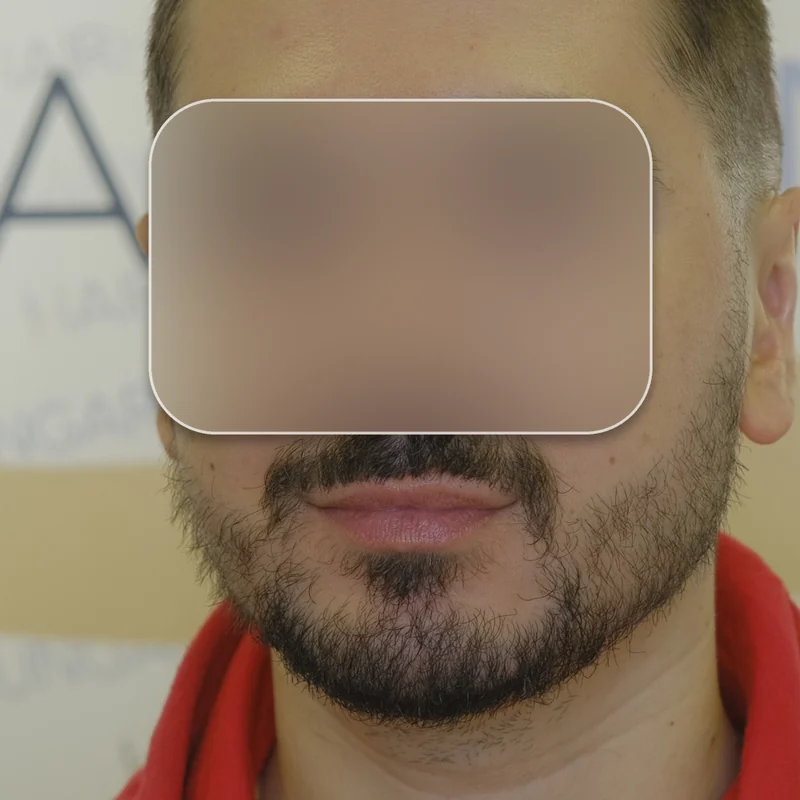
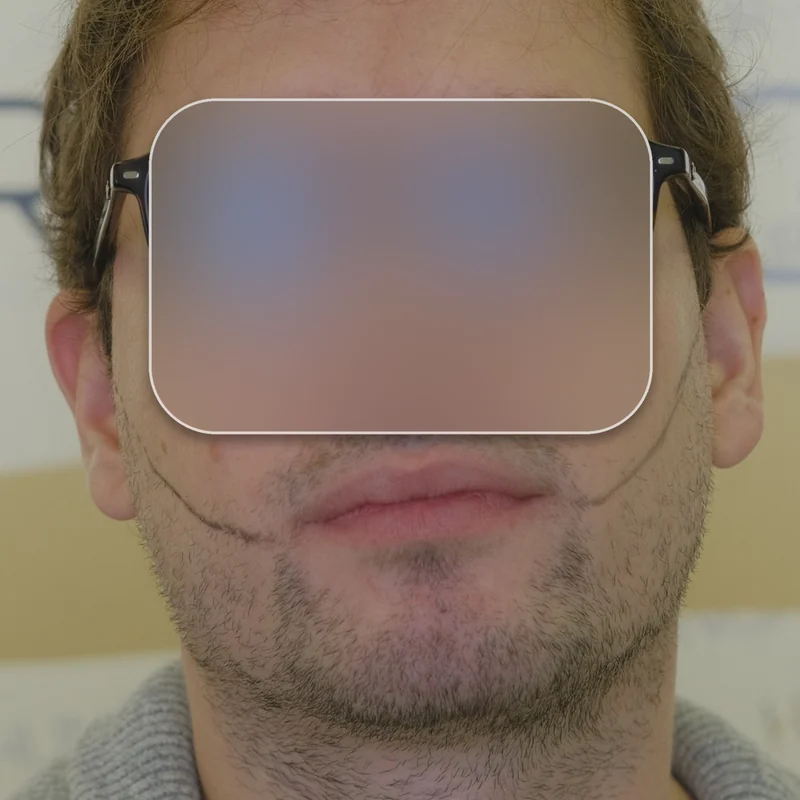
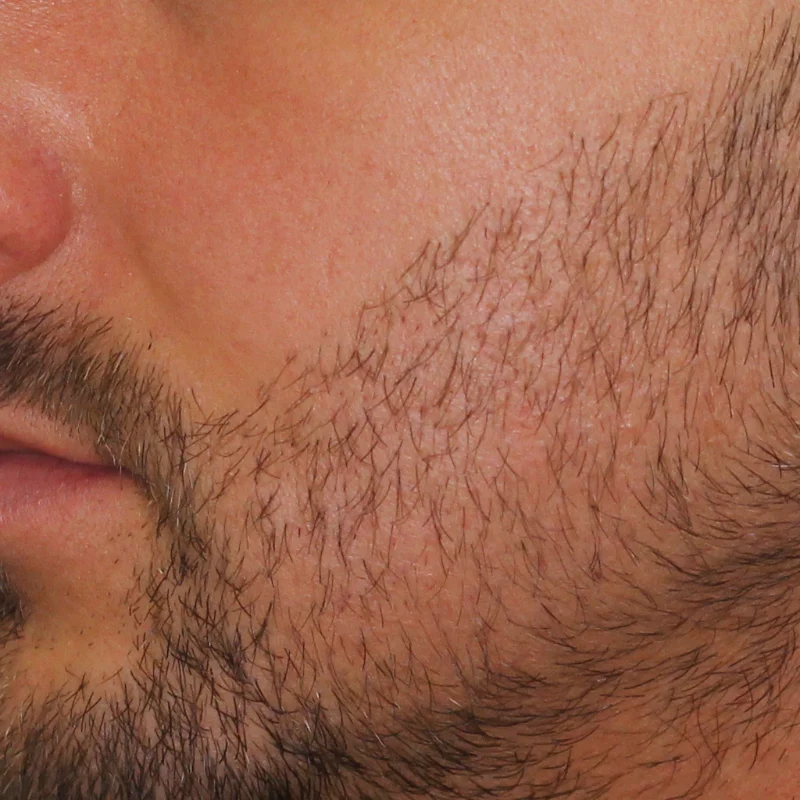
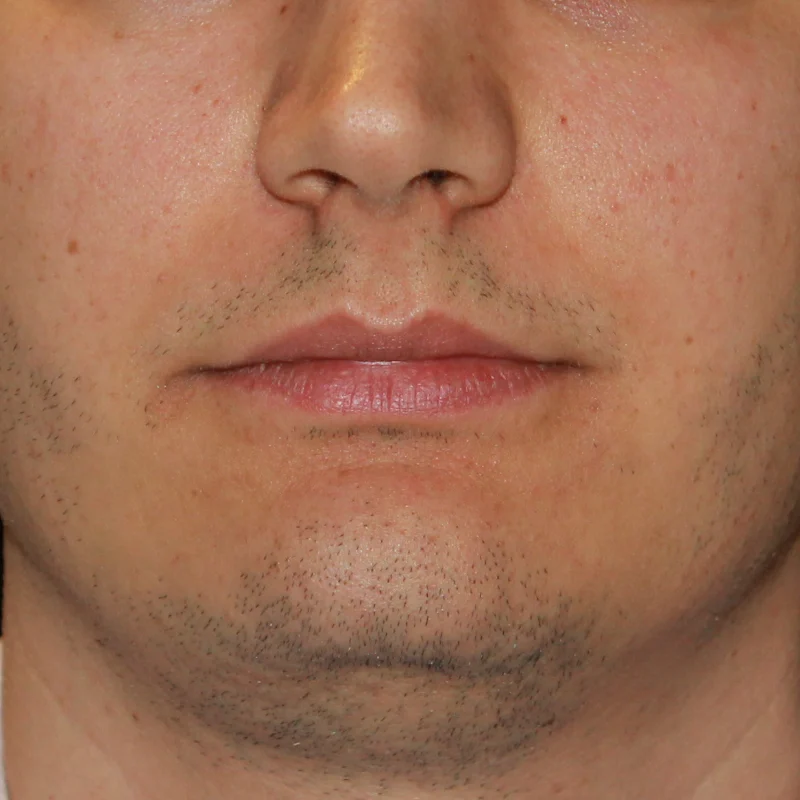
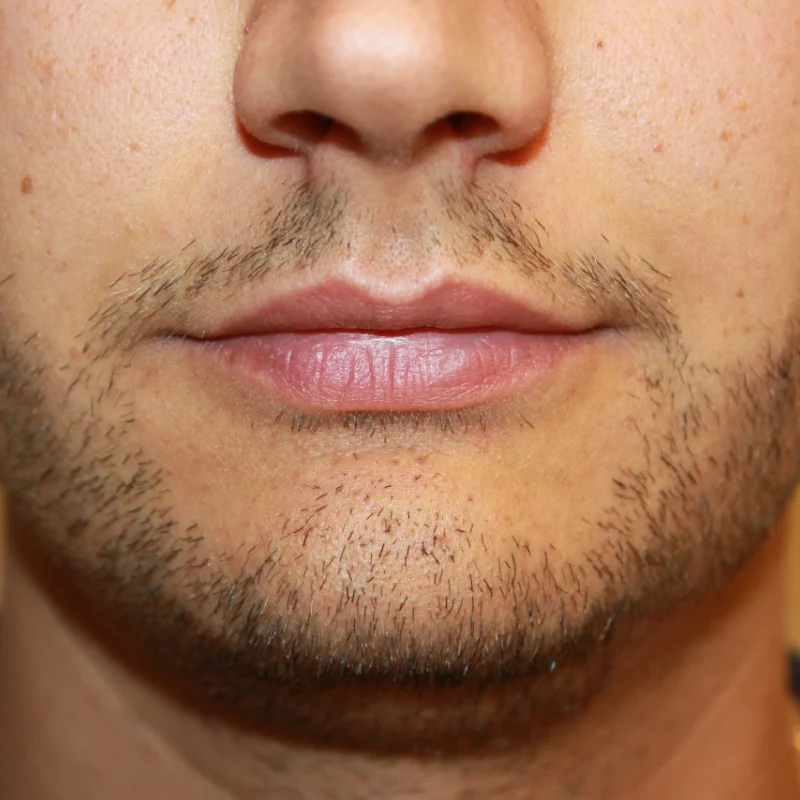
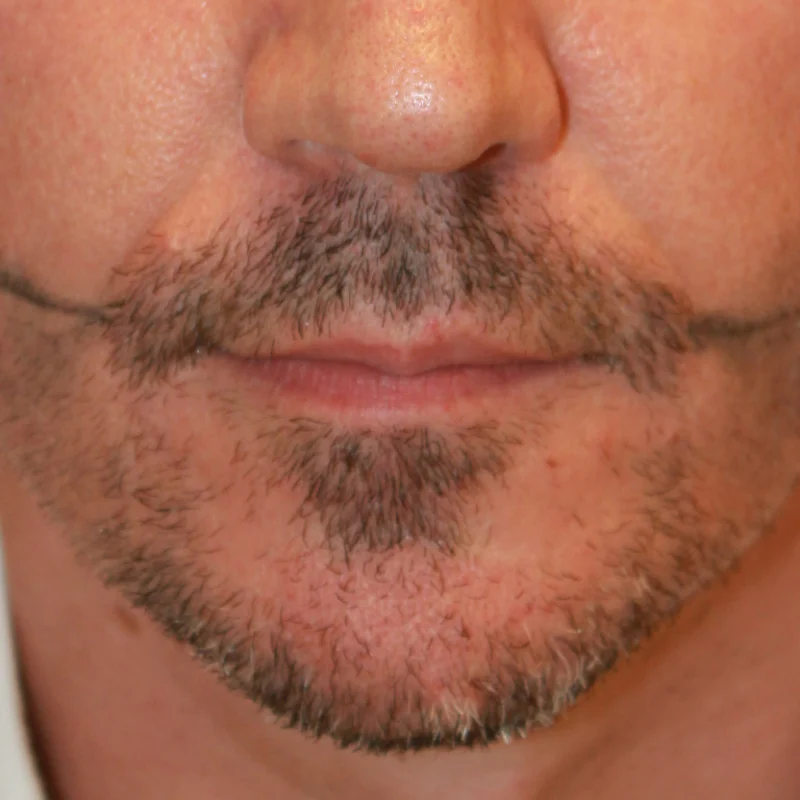
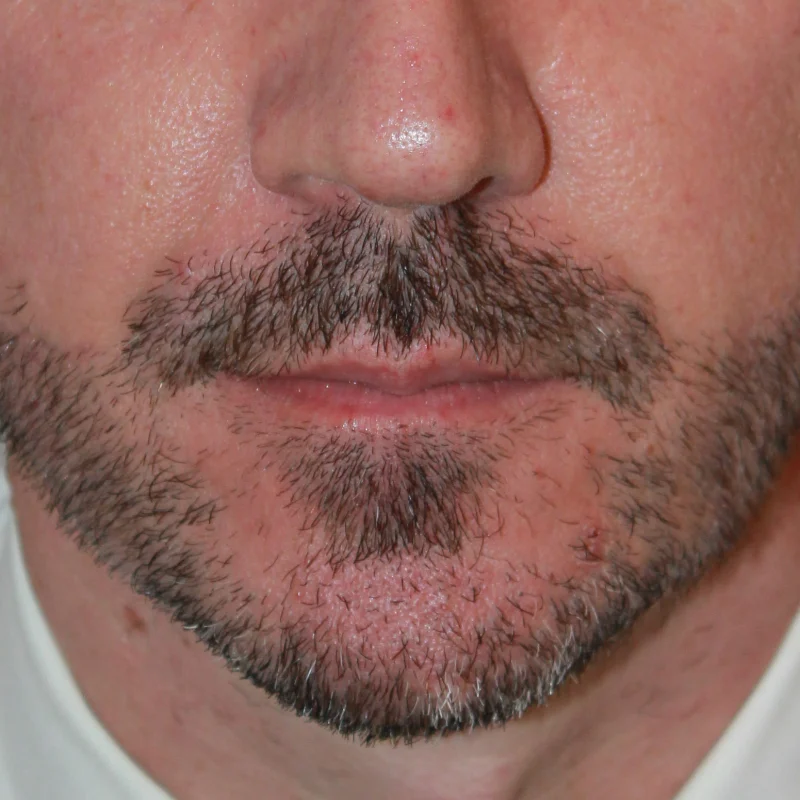
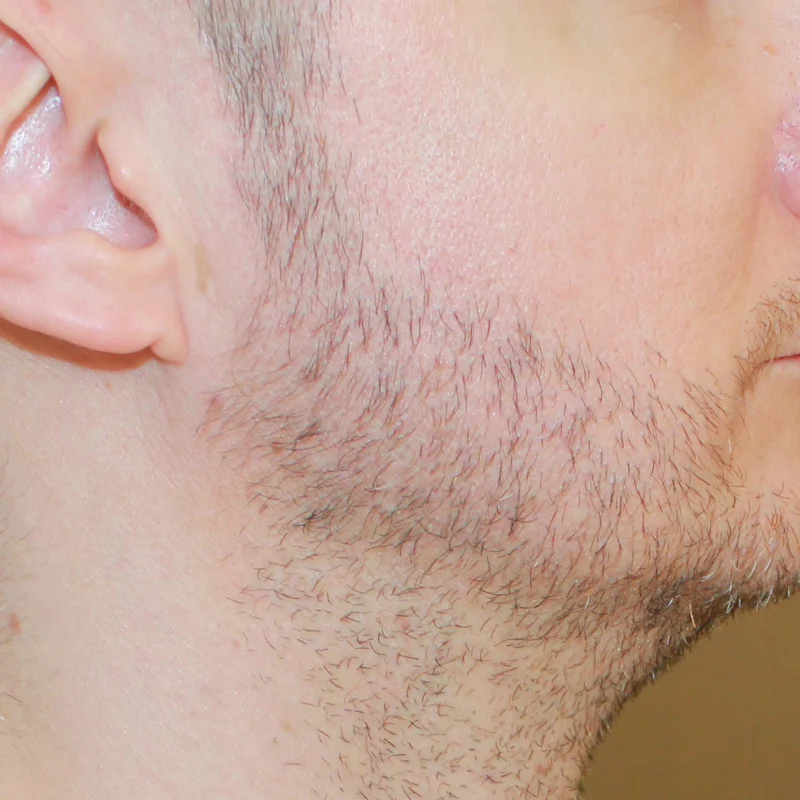
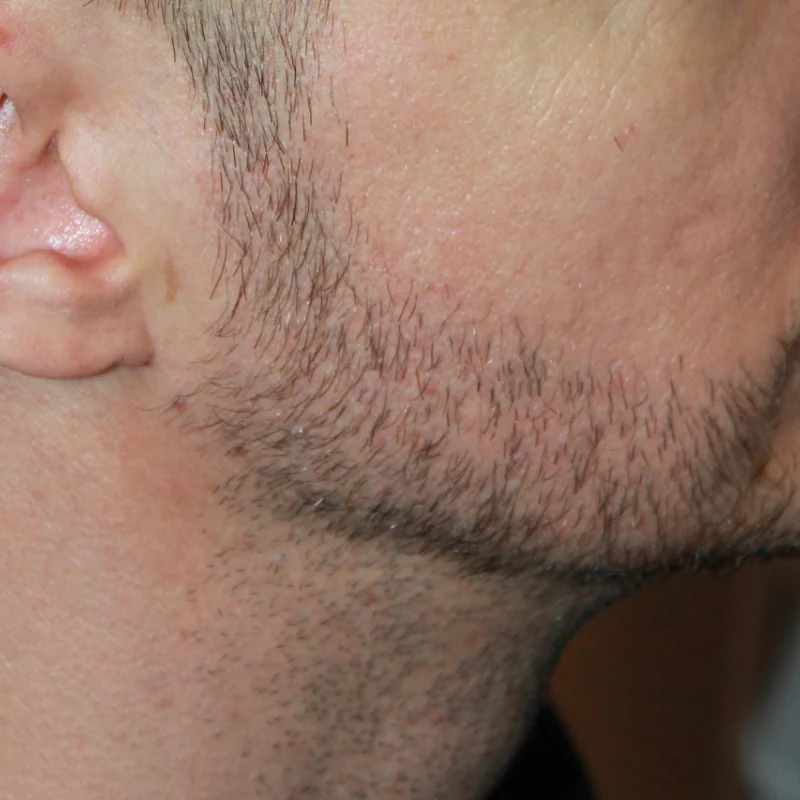
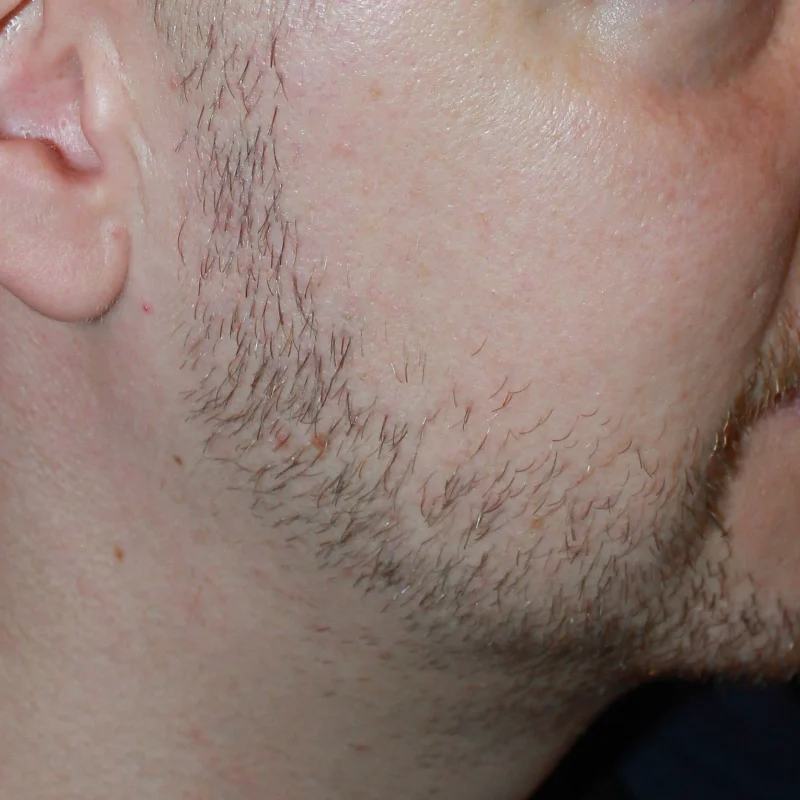
Before and after beard transplant.
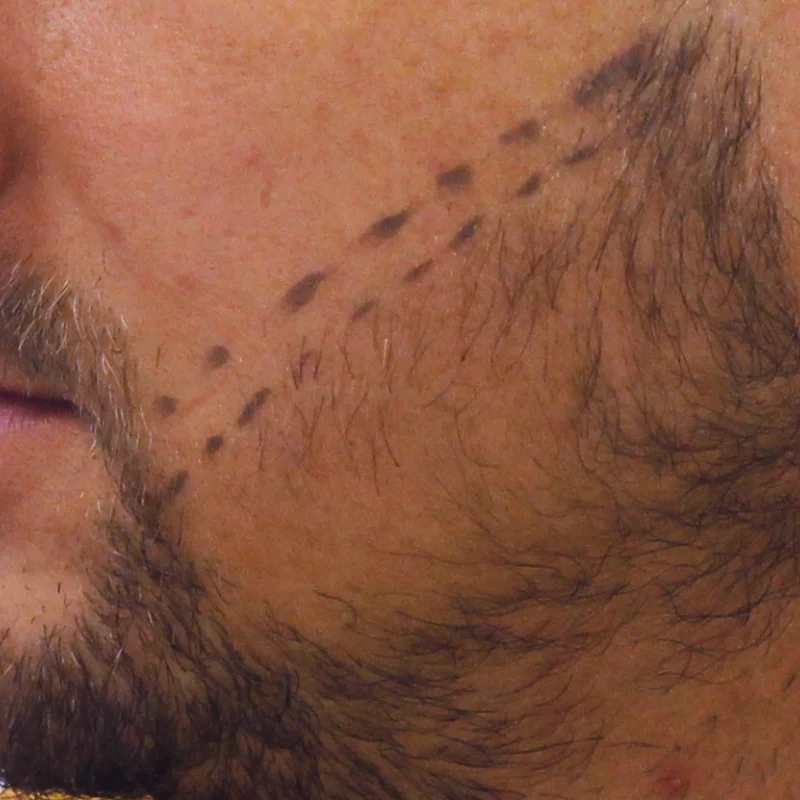
Before
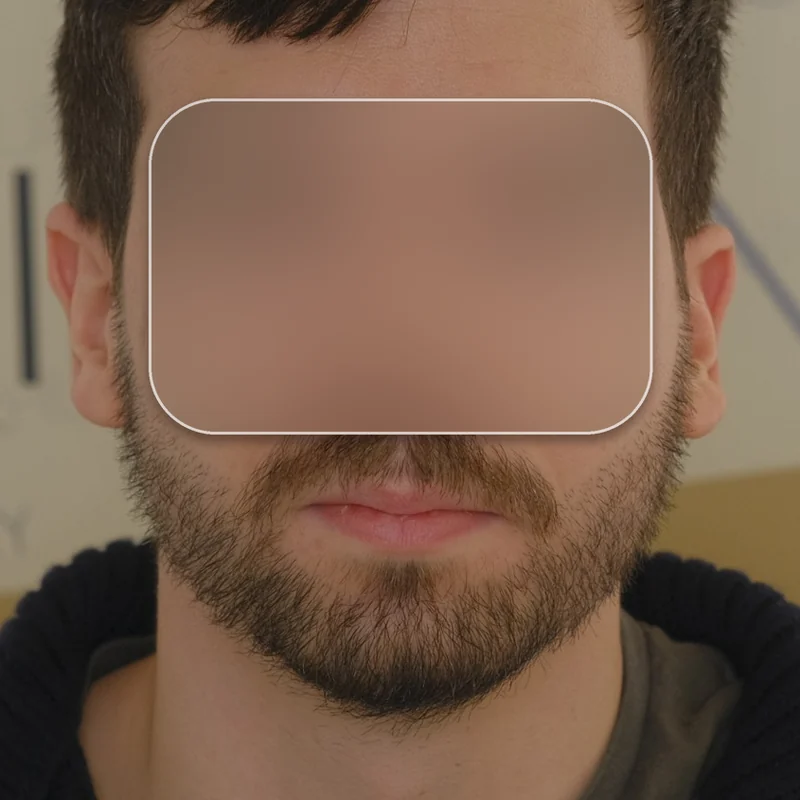
After
Sparse beard before and after the transplant.
How many hairs are needed in a beard transplant?
To fill smaller gaps, even 200 grafts from the beard under the chin can be enough, which in this case also means the same number of hairs, because when restoring facial hair, 1 graft contains on average 1 hair. However, the right number can be determined precisely by measurement.
For correcting sideburns, 200 grafts per side may also be enough; if this is done from scalp hair, that means 200 hairs on each side.
Transplanting two larger symmetrical areas, one on each cheek, may however require 500 grafts per side. In this case, the amount of beard hair that can be taken from under the chin is often not enough, so alongside the maximum number of beard grafts we use follicular units taken from scalp hair, and transplant them mixed into the cheek areas.
A full beard is built largely from scalp hair; this can mean 2,000 hairs, depending on the size of the cheeks and the desired beard line.
In the case of sparse facial hair
A sparse beard can have several causes: inflammation of the face and neck area, or even simple genetic reasons. In such cases, of course, it is important to clarify the causes, and only then can we start planning the beard transplant.
To fill small, coin-sized gaps, almost everyone has a sufficient amount of hair below the jawline. With the hairs from the neck area, we can ensure that the patches receive hair of the same quality as the surrounding beard.
For restoring larger areas of facial hair
Building a full beard, or filling larger gaps on the cheeks, is done partly with hairs taken from the back of the head. The follicular units are extracted with the SafeSystem or Trivellini FUE method also used in hair transplants, ensuring the maximum result.
It is important to note that hairs transplanted from the scalp take on the character typical of facial hair after a while, so larger areas transplanted with scalp hair will also look natural.
The beard transplant step by step
We plan the beard depending on whether the hair follicles are to be removed from a smaller or a larger area. After selecting the right donor area, we trim the hair to the desired length and then apply local anaesthesia. Then, with the method used during hair transplants , we painlessly extract the suitable grafts and transplant them to the desired area. The follicular units are implanted by mimicking the natural properties of beard hairs, with particular regard to the individual's unique characteristics.
To fill smaller gaps, even 200 grafts from the beard under the chin can be enough. For correcting sideburns, 200 grafts per side may be enough; two larger symmetrical cheek areas may need 500 grafts per side, and building a full beard up to 2,000 hairs. The exact number can be determined by measurement.
For smaller gaps, the donor area is the beard under the chin; for larger areas, the back of the head: in this case, alongside the beard grafts that can be taken, we also use follicular units taken from scalp hair and transplant them mixed together.
Yes: hairs transplanted from the scalp take on the character typical of facial hair after a while, so larger areas transplanted with scalp hair also look natural.
To extract the follicular units, we use the SafeSystem or Trivellini FUE method also used in hair transplants. The procedure is performed under local anaesthesia; the grafts are extracted painlessly and then implanted following the natural properties of beard hairs.
In the case of sparse facial hair: the cause can be inflammation of the face and neck or a genetic factor. We first clarify the causes, and only then start planning the transplant. Request a call back, and we will discuss your options.
No. Our colleague will arrange things with you by phone; the date of the consultation is agreed separately.
The personal medical consultation costs HUF 25,000. We inform you in advance about the additional fees of separately requested examinations.
Online booking
Book a consultation online
Choose the consultation type and a free time slot.
The booking calendar opens in a new tab on crm.hairhungary.hu.
Request a call back!
For any questions or to arrange a consultation appointment:
Please fill in our form and our colleague will call you back at the time you indicated!
Cookie settings
We use essential cookies to run this website. Analytics and marketing cookies and persistent traffic-source storage are enabled only with your permission. You can change your choice later. Privacy policy
Open chat. The chat loads from the HairHungary CRM (crm.hairhungary.hu) after you click.

 Before
 After
 Before
 After
 Before
 After
 Before
 After
 Before
 After
 Before
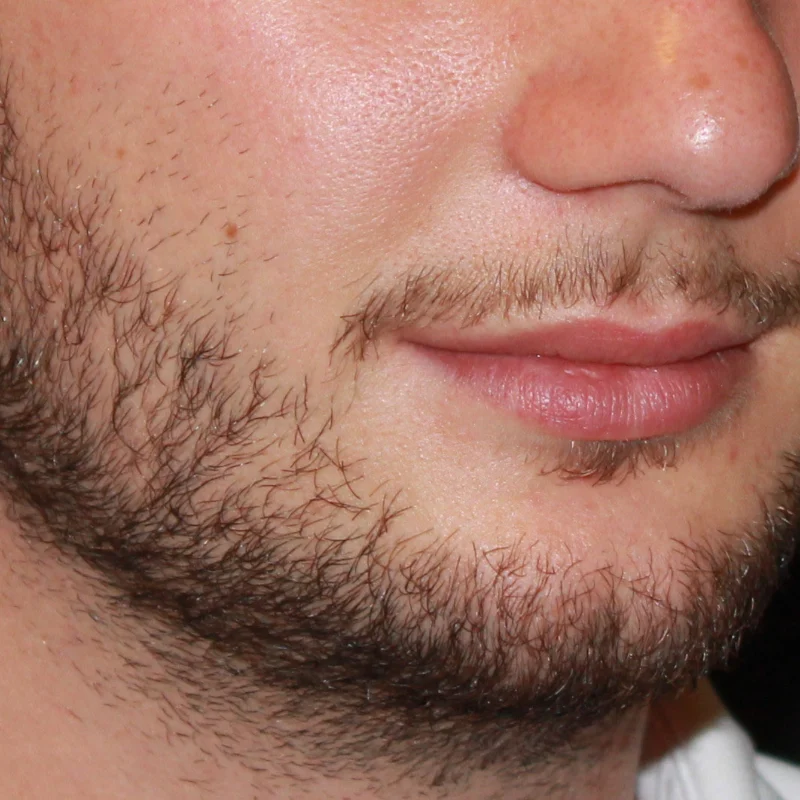 After