
Request a call back! Please fill out our form and our colleague will call you back at the indicated time.
Misconceptions about Hair Transplantation Costs
When we look around the Hungarian market, we can see that most clinics specializing in hair transplants calculate the final amount to be paid after the procedure based on the number of hair strands, but also offer the option of charging per graft. Understandably, this creates confusion for many, as not everyone is perfectly informed about the world of hair transplant costs. It might be simpler if a clinic approached pricing in only one way, but who does this really benefit?
Graft or Hair Strand Based?
To enable our patients to make an informed decision in a healthcare context, it is crucial to have a clear understanding of pricing per graft and per hair strand before committing to a situation that will define their aesthetic appearance for years following the procedure, not to mention the “surgical experience,” which significantly affects how the hair transplant process is endured.
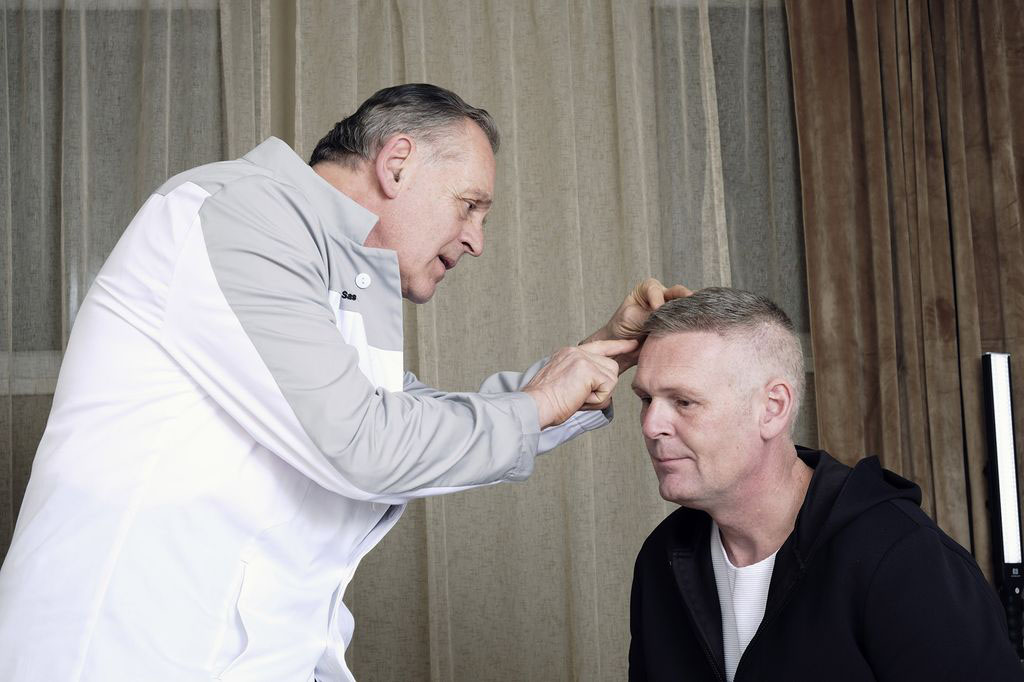
Each unit to be transplanted counts as one graft, regardless of the number of hair strands the patient desires. To create a natural hair structure, an appropriate amount of each type of graft is needed, not just those with multiple hair strands.
What is a Graft Exactly?
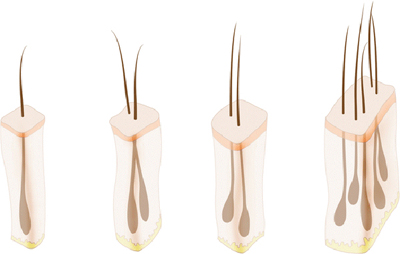
A graft refers to a piece of living tissue that is suitable for transplantation. While the term “graft” is not limited to the context of hair transplantation, it is most commonly used in hair-related circles. Grafts are actually the follicular units that contain hair strands and the protective tissue units that produce them. It is important to know that for an average patient (with Caucasian hair), one graft contains average ~2.4 hair strands (though it can occasionally be more or less). The number of these hair strands varies from person to person, and even from graft to graft, which means that some grafts contain one hair strand, while others can contain up to four. After extraction, the grafts are carefully separated according to the number of hair strands (see image below) and transplanted accordingly to achieve the most natural appearance.
Which Version is Cheaper? The True Cost of Hair Transplantation
We have reached perhaps the most interesting part of the post. Calculating the cost of a hair transplant is not exactly the simplest task. However, when someone sees on the prices page that they have the option to pay per hair strand (which is significantly cheaper on paper than per graft), they might not realize that there is more to it.
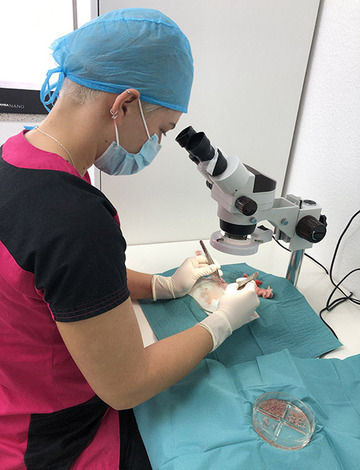 In reality, both versions calculate using grafts. The main difference is that while the graft-based pricing lists a fair and transparent amount, with hair strand-based pricing, the patient cannot know exactly what the clinic bases its calculations on. Since the modern FUE techniques currently available operate by extracting grafts, the pricing is also based on this. However, the average number of hair strands per graft counted by different clinics can vary significantly. One major advantage of the most modern Trivellini FUE Mamba , for example, is that it counts the extracted grafts in real-time, ensuring that our patients pay exactly for the number of grafts transplanted.
This aforementioned uncertainty results in either the patient’s pre-calculated amount not matching the final cost or the cost of the hair transplant being as expected, but the quality not meeting the desired level, leading to a sparser hair coverage. As mentioned, on average, one graft contains about 2 or slightly more hair strands. If there is a significant deviation in the number of hair strands per graft for a patient, it is usually because more grafts with multiple hair strands were extracted than would have been justified in an average situation (where the goal is not just to densify the middle of the scalp). To quantify: if a clinic performs a transplant of 2000 hair strands, calculating 2 hair strands per graft, it will be done with 1000 grafts. If calculating 3-4 hair strands per graft, it will be done with 500-667 grafts.. Clearly, the result will not be the same.
The optical coverage and natural appearance of a transplanted graft containing 1-2 or even 3 hair strands depend on many more factors than just the high hair strand/graft ratio. If a patient is praised during surgery for having a very good donor area and an extremely high hair strand count is established, they will have to pay significantly more for the same number of grafts, without the optical result necessarily being natural. The human scalp cannot contain mostly 3-4 hair strand grafts if a natural look is desired. Furthermore, when planning hair structure, we must always think about the future. If the extent of hair loss continues, there will not be enough multiple-hair grafts available for a subsequent surgery to densify the existing hair.
It can be said that hair strand-based pricing is a widely used marketing tactic. Therefore, if you encounter such an offer, please approach it with caution. It is our medical-professional responsibility to adhere to the agreed-upon hair transplant prices while representing the science of aesthetic renewal at a high standard.
Click the button below to view our comprehensive pricing, without any hidden costs!